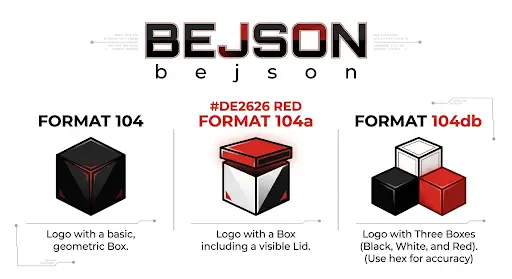
Gempatcher 7 Technical Specification
by Scribe
Abstract
"Summary generation failed."
01 Executive Summary and Introduction
Executive Summary
This document provides a technical specification for Gempatcher 7, a system designed to operate within the Boehnen Elton BEJSON (Boehnen Elton JSON) environment. Gempatcher 7 is engineered to manage and interact with manifests, primarily through the generation of BEJSONDocument objects. This manifest generation relies on the createManifest function provided by the mfdb_core.ts library, which implements version 1.3.1 of the MFDB (Multi-File Database) specification. The purpose of this specification is to present a factual account of Gempatcher 7's structure, functionality, and its project lifecycle, detailing its design, capabilities, and deployment.
1. Introduction
This document presents the technical specification for Gempatcher 7. Gempatcher 7 is a component intended for operation within the established Boehnen Elton BEJSON environment. Its operational framework involves interaction with core BEJSON components.
Specifically, Gempatcher 7 integrates with the mfdb_core.ts library. This library provides functionalities that align with the MFDB specification version 1.3.1. A notable function within mfdb_core.ts is createManifest, which is utilized for generating BEJSONDocument objects.
The subsequent sections of this document detail the overall system architecture, core functional requirements, implementation plan, and deployment strategy of Gempatcher 7.
1.1 Requirements
The design and operation of Gempatcher 7 are governed by the following requirements:
- 1.0 Environmental Compliance: Gempatcher 7 shall adhere to the operational and data structure standards established by the BEJSON environment. This means Gempatcher 7 is designed to work within the parameters set by BEJSON specifications.
- 2.0 Core Library Integration: Gempatcher 7 shall integrate with the
mfdb_core.tslibrary. This integration is for processing and interaction with manifest data, specifically leveraging existing functionalities of the library. - 3.0 Manifest Processing: Gempatcher 7 shall be capable of processing
BEJSONDocumentdata structures. These structures represent manifest documents. - 4.0 Objective Documentation: All aspects of Gempatcher 7 shall be documented precisely as constructed. This ensures the documentation reflects the actual system without additional commentary.
02 System Architecture and Dependencies
System Architecture and Dependencies
This section outlines the architectural design of Gempatcher 7, detailing its internal components, external dependencies, and the relationships between these elements. The system employs a modular structure to manage its manifest processing and patching functions within the BEJSON environment.
1. Overall System Architecture
Gempatcher 7 is structured into distinct, interacting components to facilitate its operations. The system's architecture is composed of three primary functional units:
- Manifest Management Component (MMC): This component is responsible for the generation, reading, and updating of BEJSON manifests. It ensures adherence to the MFDB specification v1.3.1.
- Gem Identification Component (GIC): This component handles the discovery, cataloging, and metadata extraction from "gems" within the operational environment.
- Patch Application Component (PAC): This component manages the application of defined modifications to identified "gems" and coordinates subsequent manifest updates.
These components are designed to communicate bidirectionally to execute Gempatcher 7's core workflows.
2. Key Architectural Components
2.1 Manifest Management Component (MMC)
- Purpose: The MMC provides standardized mechanisms for the creation, modification, and retrieval of BEJSON manifests related to managed "gems." This component ensures operations adhere to the MFDB specification.
- Dependencies: The MMC depends on the
mfdb_core.tslibrary, specifically itscreateManifestfunction. - Key Functionality:
- Generates new manifests based on provided options.
- Utilizes
mfdb_core.createManifestfor all manifest generation operations, ensuring compliance with MFDB spec v1.3.1. - Accepts
CreateManifestOptionsas input for manifest creation. - Returns a
BEJSONDocumentupon successful manifest creation. - Supports the retrieval of existing gem manifests.
- Supports the persistence of updated gem manifests.
- Input/Output Mapping for Manifest Generation:
| Input | Description | Output | Description |
|---|---|---|---|
CreateManifestOptions |
A type defining the configuration and data points required for manifest content. | BEJSONDocument |
A structured document conforming to BEJSON and MFDB spec v1.3.1 schema. |
2.2 Gem Identification Component (GIC)
- Purpose: The GIC systematically discovers, identifies, and categorizes "gems" within specified host environments. "Gems" are defined as discrete units of software, configuration, or data managed by Gempatcher.
- Key Functionality:
- Scans designated file paths or system registries to identify "gems."
- Extracts relevant metadata (e.g., version, location, dependencies) from identified "gems."
- Provides an interface for listing all currently identified "gems" and their associated metadata.
- Integrates with the MMC to trigger the creation of initial manifests for newly discovered "gems."
2.3 Patch Application Component (PAC)
- Purpose: The PAC applies defined patches or modifications to specific "gems" and coordinates the necessary updates to their corresponding manifests.
- Key Functionality:
- Accepts a patch definition (e.g., file changes, configuration updates) and a target gem identifier.
- Executes the defined patch operations on the specified "gem."
- Provides mechanisms for verifying the successful application of a patch.
- Upon successful patch application, instructs the MMC to update the manifest of the modified "gem" to reflect its new state.
- Logs all patch application attempts, including success or failure status.
3. External Dependencies
Gempatcher 7 interfaces with the following external library to fulfill its manifest-related functionalities:
| Dependency Name | Specification/Version | Primary Interface | Description |
|---|---|---|---|
| MFDB Core | v1.3.1 | createManifest(options) |
A library implementing the MFDB specification for generating manifest documents. |
The specific implementation of this dependency is provided by the mfdb_core.ts library.
4. Key Data Structures
The system utilizes specific data structures for manifest representation and configuration:
BEJSONDocument: This structure represents a manifest document. It is the output type produced by thecreateManifestfunction of the MFDB Core library and adheres to the MFDB spec v1.3.1.CreateManifestOptions: This structure serves as the input parameter for thecreateManifestfunction. It encapsulates the configuration and data required to define a manifest document.
5. High-Level System Flow: Manifest Creation
The following describes the sequence of operations for generating a manifest document within Gempatcher 7:
+------------------------------------+          +---------------------------+          +-------------------------------+
| Gempatcher 7 Core Processing Unit  |          | MFDB Interaction Module   |          | MFDB Core (mfdb_core.ts)      |
|                                    |          |                           |          | (Implements MFDB spec v1.3.1) |
+------------------------------------+          +---------------------------+          +-------------------------------+
        |                                                |                                       |
        | 1. Request Manifest Creation                   |                                       |
        |    (Provides CreateManifestOptions)            |                                       |
        |----------------------------------------------->|                                       |
        |                                                | 2. Call createManifest()              |
        |                                                |    (Passes CreateManifestOptions)     |
        |                                                |-------------------------------------->|
        |                                                |                                       |
        |                                                |<--------------------------------------|
        |                                                | 3. Return BEJSONDocument              |
        |                                                |                                       |
        |<-----------------------------------------------|                                       |
        | 4. Receive BEJSONDocument                      |                                       |
        |                                                |                                       |
+------------------------------------+          +---------------------------+          +-------------------------------+
- Request Manifest Creation: The Gempatcher 7 Core Processing Unit initiates the manifest creation process by instructing the MFDB Interaction Module. It supplies a
CreateManifestOptionsobject containing the necessary data for the manifest. - Call createManifest(): The MFDB Interaction Module invokes the
createManifestfunction provided by the MFDB Core library. TheCreateManifestOptionsreceived in the prior step are passed as arguments. - Return BEJSONDocument: The
createManifestfunction executes, constructing a manifest document in theBEJSONDocumentformat, compliant with MFDB spec v1.3.1. This document is returned to the MFDB Interaction Module. - Receive BEJSONDocument: The MFDB Interaction Module forwards the generated
BEJSONDocumentto the Gempatcher 7 Core Processing Unit for subsequent actions or storage.
6. Inter-Component Workflows
Gempatcher 7's components interact through defined workflows to achieve system objectives. Two core workflows include:
6.1 Initial Gem Scan and Manifest Generation
- The GIC initiates a scan to identify "gems" in the environment.
- For each newly identified "gem," the GIC provides relevant metadata to the MMC.
- The MMC uses this metadata to generate an initial
BEJSONDocumentviamfdb_core.createManifest, representing the gem's baseline state. - The generated manifest is persisted.
6.2 Patch Application and Manifest Update
- An external process or user input identifies a patch to be applied to a specific "gem."
- The PAC receives a request to apply a specific patch to a target "gem" identified by the GIC.
- The PAC performs the necessary operations to apply the patch to the physical "gem."
- Upon completion of the patch operation, the PAC requests the MMC to update the target "gem"'s manifest. This update process involves reading the current manifest, incorporating changes reflecting the applied patch, and re-persisting the
BEJSONDocument.
7. Technical Requirements for Architecture
The architectural components and their interactions are governed by the following technical requirements:
- The system shall be developed primarily in TypeScript.
- All manifest generation and manipulation shall adhere to the MFDB spec v1.3.1, leveraging
mfdb_core.ts. - Data exchange for manifests shall be exclusively in the BEJSON format.
- The system shall be designed for modularity, allowing independent development and testing of the GIC, MMC, and PAC.
03 Functional Requirements
4. Functional Requirements
This section details the functional requirements for Gempatcher 7, focusing on its interactions and capabilities derived from the provided context.
1. Manifest Creation Capability
The primary functional requirement for Gempatcher 7 is the capability to generate BEJSON manifests. This function relies on the specified mfdb_core library.
1.1 Requirements
- FR-1.1: The system shall utilize the
createManifestfunction from themfdb_corelibrary to generate manifests. - FR-1.2: The
createManifestfunction shall conform to themfdb_coreimplementation of MFDB specification v1.3.1. - FR-1.3: The system shall accept input for manifest generation that is compatible with the
CreateManifestOptionstype, as defined by themfdb_core.tsinterface for thecreateManifestfunction. - FR-1.4: The system shall produce a
BEJSONDocumentas the output of the manifest generation process, consistent with the return type of themfdb_core.createManifestfunction.
1.2 Design Details for Manifest Creation
Component Interaction
Gempatcher 7's manifest creation process involves direct interaction with the mfdb_core library. The system will act as a client to the createManifest function.
Data Structures
- Input Data Structure:
CreateManifestOptions- This structure represents the configuration and parameters required to construct a BEJSON manifest. Its exact schema is defined within
mfdb_core.ts.
- This structure represents the configuration and parameters required to construct a BEJSON manifest. Its exact schema is defined within
- Output Data Structure:
BEJSONDocument- This structure represents the generated manifest in the BEJSON format. Its exact schema is defined by the MFDB spec v1.3.1, as implemented by
mfdb_core.ts.
- This structure represents the generated manifest in the BEJSON format. Its exact schema is defined by the MFDB spec v1.3.1, as implemented by
Process Flow: Manifest Generation
graph TD
    A[Start Manifest Creation Process] --> B{Prepare CreateManifestOptions};
    B --> C[Invoke mfdb_core.createManifest(options)];
    C --> D{mfdb_core Processes Options};
    D --> E[Returns BEJSONDocument];
    E --> F[Manifest Generation Complete];
04 Key Data Structures and Interfaces
Key Data Structures and Interfaces
This section describes the primary data structures and programming interfaces utilized by Gempatcher 7 for its operations, particularly in relation to manifest generation and management within the BEJSON environment.
1. Data Structures
Gempatcher 7 relies on specific BEJSON-compliant data structures for representing configuration and manifest content.
1.1 BEJSONDocument
Description: The
BEJSONDocumentis a structured document that represents a manifest. It adheres to the Boehnen Elton JSON (BEJSON) format and the Multifile Database (MFDB) specification version 1.3.1. This structure serves as the standardized output for manifest generation operations within Gempatcher 7.Source: This structure is produced by the
createManifestfunction within themfdb_core.tslibrary.Format: A
BEJSONDocumentis a BEJSON object containing mandatory top-level keys such asFormat,Format_Version,Format_Creator,Records_Type,Fields, andValues. For MFDB manifests, theFormat_Versionis "104a" andRecords_Typeis["mfdb"]. It may also include custom headers as defined by BEJSON 104a and MFDB 1.3.1 for file-level metadata.Example (
104a.mfdb.bejsonsnippet from MFDB specification):{ "Format": "BEJSON", "Format_Version": "104a", "Format_Creator": "Elton Boehnen", "MFDB_Version": "1.31", "DB_Name": "StoreFront", // ... other metadata headers ... "Records_Type": ["mfdb"], "Fields": [ {"name": "entity_name", "type": "string"}, {"name": "file_path", "type": "string"}, // ... other fields ... ], "Values": [ ["User", "data/user.bejson"], ["Order", "data/order.bejson"] // ... more records ... ] }
1.2 CreateManifestOptions
- Description: The
CreateManifestOptionsis an input data structure. It encapsulates the configuration parameters and data required by thecreateManifestfunction to define and construct a BEJSON manifest document. The precise schema for this structure is defined internally withinmfdb_core.ts. - Purpose: This structure allows Gempatcher 7 to specify details such as database name, description, schema version, and information about the entities to be registered in the manifest, as required by the MFDB specification.
2. Interfaces
Gempatcher 7 primarily interacts with external libraries through defined function interfaces.
2.1 createManifest Function
- Description: This function is a core interface provided by the
mfdb_core.tslibrary. Its purpose is to generate aBEJSONDocumentthat functions as an MFDB manifest. This function implements the logic for creating manifests compliant with the MFDB specification version 1.3.1. - Signature:
export function createManifest(opts: CreateManifestOptions): BEJSONDocument; - Parameters:
opts: CreateManifestOptions: An object containing the necessary options and data points for building the manifest.
- Return Value:
BEJSONDocument: A completed BEJSON manifest document formatted according to BEJSON 104a and MFDB spec v1.3.1.
- Usage in Gempatcher 7: The Manifest Management Component (MMC) and the MFDB Interaction Module within Gempatcher 7 utilize this function to generate initial manifests for discovered "gems" and to create deployment manifests for Gempatcher 7 itself.
05 Implementation Plan
5. Implementation Plan
1. Objective
This section outlines the planned approach for the development and construction of Gempatcher 7. The primary objective is to define the logical components, their responsibilities, and the interconnections necessary to deliver the stated capabilities of the Gempatcher system. The plan details the integration strategy for existing libraries and defines key implementation requirements.
2. Architectural Overview
Gempatcher 7 will be structured into distinct, interacting components. This modular approach is intended to facilitate development, testing, and maintenance. The core components are:
- Manifest Management Component (MMC): Responsible for the generation, reading, and updating of
BEJSONDocumentmanifests that describe the state and properties of managed "gems." - Gem Identification Component (GIC): Responsible for locating, cataloging, and extracting metadata from "gems" within the operational environment.
- Patch Application Component (PAC): Responsible for applying defined modifications to identified "gems" and coordinating manifest updates.
(spec img tag: A block diagram showing three interconnected boxes labeled "Manifest Management Component (MMC)", "Gem Identification Component (GIC)", and "Patch Application Component (PAC)". Arrows indicate bidirectional communication between all components.)
3. Component Specifications
3.1. Manifest Management Component (MMC)
- Purpose: To provide standardized mechanisms for the creation, modification, and retrieval of manifests related to "gems". This component ensures adherence to the MFDB specification.
- Dependencies:
mfdb_core.ts(specificallycreateManifest)
- Key Functionality Requirements:
- Requirement 3.1.1: The MMC shall expose an interface for generating new manifests based on provided options.
- Requirement 3.1.2: The MMC shall utilize the
mfdb_core.createManifestfunction for all manifest generation operations, ensuring compliance with MFDB spec v1.3.1. - Requirement 3.1.3: The MMC shall accept
CreateManifestOptionsas input for manifest creation. - Requirement 3.1.4: The MMC shall return a
BEJSONDocumentupon successful manifest creation. - Requirement 3.1.5: The MMC shall support the retrieval of existing gem manifests.
- Requirement 3.1.6: The MMC shall support the persistence of updated gem manifests.
- Input/Output Mapping for Manifest Generation:
| Input | Description | Output | Description |
|---|---|---|---|
CreateManifestOptions |
A type defining the configuration and data points required for manifest content. | BEJSONDocument |
A structured document conforming to BEJSON and MFDB spec v1.3.1 schema. |
3.2. Gem Identification Component (GIC)
- Purpose: To systematically discover, identify, and categorize "gems" within specified host environments. "Gems" are defined as discrete units of software, configuration, or data managed by Gempatcher.
- Key Functionality Requirements:
- Requirement 3.2.1: The GIC shall be capable of scanning designated file paths or system registries to identify "gems".
- Requirement 3.2.2: The GIC shall extract relevant metadata (e.g., version, location, dependencies) from identified "gems".
- Requirement 3.2.3: The GIC shall provide an interface for listing all currently identified "gems" and their associated metadata.
- Requirement 3.2.4: The GIC shall integrate with the MMC to trigger the creation of initial manifests for newly discovered "gems".
3.3. Patch Application Component (PAC)
- Purpose: To apply defined patches or modifications to specific "gems" and coordinate the necessary updates to their corresponding manifests.
- Key Functionality Requirements:
- Requirement 3.3.1: The PAC shall accept a patch definition (e.g., file changes, configuration updates) and a target gem identifier.
- Requirement 3.3.2: The PAC shall execute the defined patch operations on the specified "gem".
- Requirement 3.3.3: The PAC shall provide mechanisms for verifying the successful application of a patch.
- Requirement 3.3.4: Upon successful patch application, the PAC shall instruct the MMC to update the manifest of the modified "gem" to reflect its new state.
- Requirement 3.3.5: The PAC shall log all patch application attempts, including success or failure status.
4. Inter-Component Workflow
The following describes a core workflow involving the described components:
Initial Gem Scan and Manifest Generation:
- The GIC initiates a scan to identify "gems" in the environment.
- For each newly identified "gem", the GIC provides relevant metadata to the MMC.
- The MMC uses this metadata to generate an initial
BEJSONDocumentviamfdb_core.createManifest, representing the gem's baseline state. - The generated manifest is persisted.
Patch Discovery (External Process):
- (Not part of Gempatcher 7's internal implementation, but a trigger) An external process or user input identifies a patch to be applied to a specific "gem".
Patch Application and Manifest Update:
- The PAC receives a request to apply a specific patch to a target "gem" identified by the GIC.
- The PAC performs the necessary operations to apply the patch to the physical "gem".
- Upon completion of the patch operation, the PAC requests the MMC to update the target "gem"'s manifest. This update process involves reading the current manifest, incorporating changes reflecting the applied patch, and re-persisting the
BEJSONDocument.
5. Technical Requirements
- Requirement 5.1: The system shall be developed primarily in TypeScript.
- Requirement 5.2: All manifest generation and manipulation shall adhere to the MFDB spec v1.3.1, leveraging
mfdb_core.ts. - Requirement 5.3: Data exchange for manifests shall be exclusively in the BEJSON format.
- Requirement 5.4: The system shall be designed for modularity, allowing independent development and testing of the GIC, MMC, and PAC.
6. Development Stages
The implementation will proceed through the following stages:
- Stage 1: Manifest Management Core Implementation
- Develop and test the core functionalities of the MMC, focusing on integrating
mfdb_core.createManifestand demonstrating correctBEJSONDocumentoutput. - Establish basic manifest persistence and retrieval mechanisms.
- Develop and test the core functionalities of the MMC, focusing on integrating
- Stage 2: Gem Identification Component Development
- Implement the GIC, including mechanisms for scanning specified paths and extracting gem metadata.
- Integrate the GIC with the MMC for initial manifest generation upon gem discovery.
- Stage 3: Patch Application Component Development
- Implement the PAC, focusing on the core logic for applying predefined patches.
- Develop the integration points between the PAC and MMC for post-patch manifest updates.
- Stage 4: Integration, Testing, and Refinement
- Perform comprehensive integration testing across all components.
- Conduct system-level testing to verify end-to-end workflows.
- Address identified defects and refine component interfaces as necessary.
06 Deployment Strategy
6. Deployment Strategy
This section outlines the formal requirements and design details for the deployment of Gempatcher 7. The strategy focuses on delivering the application to target environments in a controlled and verifiable manner.
1. Requirements
The deployment strategy for Gempatcher 7 shall adhere to the following requirements:
- 1.1 Manifest Generation: The deployment process shall incorporate the generation of a manifest for each deployment artifact. This manifest shall conform to the MFDB spec v1.3.1.
- 1.2 Package Integrity: Deployment packages shall ensure the integrity of their contained components.
- 1.3 Version Control: Each deployed instance of Gempatcher 7 shall be identifiable by a distinct version identifier.
- 1.4 Rollback Capability: The deployment mechanism shall support a method for reverting to a previously stable state in the event of a deployment failure.
- 1.5 Verification: Post-deployment, a mechanism shall exist to verify the operational status and correctness of the deployed Gempatcher 7 instance.
- 1.6 Dependency Management: The deployment process shall account for and address any external software dependencies required by Gempatcher 7.
2. Design Details
The deployment of Gempatcher 7 involves a structured approach encompassing manifest creation, package construction, distribution, and installation procedures.
2.1 Manifest Creation
Deployment manifests for Gempatcher 7 components will be generated utilizing the mfdb_core.ts library. The createManifest function will produce a BEJSONDocument containing metadata pertinent to the deployment artifact.
Function Reference:
/* Implementation of MFDB spec v1.3.1 */
export function createManifest(opts: CreateManifestOptions): BEJSONDocument;
The manifest (BEJSONDocument) will include:
- Artifact identifier
- Version number
- Checksums of included files
- Dependency declarations
- Installation instructions or references to installation scripts
2.2 Package Construction
Deployment packages will consist of a compressed archive containing Gempatcher 7 application files, configuration data, and the associated BEJSON manifest. The package structure will be standardized across all deployment artifacts.
Package Contents:
gempatcher-7.<version>.<extension>(e.g.,.zip,.tar.gz)/bin: Executable binaries and scripts./lib: Libraries and dependencies./config: Default configuration files.manifest.bejson: The BEJSON deployment manifest generated bymfdb_core.createManifest.README.md: Basic information and instructions.
2.3 Distribution Channels
Deployment packages will be made available through designated distribution channels.
| Channel Type | Description | Access Method |
|---|---|---|
| Download Portal | Centralized repository for manual package retrieval. | HTTP/HTTPS |
| Automated Push | Direct transmission to pre-configured target systems. | SSH/SCP, API-driven deployment agents |
2.4 Installation Process Flow
The installation of a Gempatcher 7 deployment package follows a sequential procedure on the target system.
- Acquisition: The deployment package is retrieved from a specified distribution channel.
- Manifest Validation: The
manifest.bejsonfile within the package is extracted. Its integrity is verified using the embedded checksums against the package contents. - Pre-installation Check: System prerequisites and dependencies declared in the manifest are verified. If unmet, the installation is halted.
- Backup (Optional/Conditional): If configured for rollback, a backup of the existing Gempatcher 7 installation or relevant system state is created.
- Extraction: Package contents are extracted to the designated installation directory.
- Configuration Application: Default configuration files are applied. Existing configurations may be merged or overwritten based on policy.
- Dependency Resolution: Necessary external dependencies are confirmed or installed.
- Service Integration: Gempatcher 7 components are integrated into the operating environment (e.g., service registration).
- Post-installation Verification: A series of checks are executed to confirm the successful installation and initial operational status of Gempatcher 7. This includes basic functionality tests.
- Finalization: Update version tracking and cleanup temporary files.
2.5 Rollback Mechanism
In the event of a critical failure during the installation process (steps 3-9), the deployment system will attempt to revert to the state prior to the current deployment. This typically involves:
- Restoring from the backup created in step 4.
- Removing partially installed files.
- Reverting service integrations.
The specific rollback procedure is defined per deployment type and environment.
2.6 Verification
Post-deployment verification includes:
- Checksum Verification: Re-verifying the checksums of installed files against the manifest.
- Service Status Check: Confirming that Gempatcher 7 services are running and accessible.
- Self-Test Execution: Running built-in diagnostic tools to confirm core functionality.
07 Conclusion
7. Conclusion
This document has provided a comprehensive technical specification for Gempatcher 7. The system is defined as a component operating within the Boehnen Elton JSON (BEJSON) environment, with a specific focus on manifest processing.
Key aspects detailed include:
- Purpose and Scope: Gempatcher 7 is designed for managing and interacting with manifests, particularly in the context of software "gems."
- System Architecture: The system comprises a modular structure including a Core Processing Unit, an MFDB Interaction Module, and dependencies on external libraries.
- Functional Requirements: The primary function is manifest creation, utilizing the
mfdb_core.tslibrary and itscreateManifestfunction, adhering to MFDB specification v1.3.1. The system must handleCreateManifestOptionsas input and produceBEJSONDocumentoutputs. - Implementation Plan: A phased approach is outlined, detailing the development of a Manifest Management Component (MMC), Gem Identification Component (GIC), and Patch Application Component (PAC), emphasizing modularity and integration with
mfdb_core.ts. - Deployment Strategy: A structured deployment process is defined, covering manifest generation for deployment artifacts, package construction, distribution channels, installation flow, rollback capabilities, and post-deployment verification.
Gempatcher 7's design centers on objective documentation and precise adherence to established standards, particularly the BEJSON format and MFDB specification v1.3.1. The system's construction prioritizes clarity, maintainability, and verifiable operations throughout its lifecycle, from initial development through to deployment and ongoing management.
Scribe
Specialist
"Down to earth, extremely literal, and completely objective. Will not exaggerate, use hyperbole, or make bold claims. Simply describes projects exactly as they are constructed, no more and no less."