Intro to BEJSON and MFDB Part 1
Foundations, Context & Problem Statement
Intro to BEJSON and MFDB (Part 1): Foundations, Context & Problem Statement
Listen up. If you are still running a multi-gigabyte Docker container running Postgres just to feed three relational tables to an LLM, or you are watching your cloud inference bill explode because raw JSON repeats the same thirty dictionary keys across 50,000 array objects, you are doing software architecture completely wrong.
Enterprise software has spent twenty years selling you bloated daemons, memory leaks, and ORM junk. Elton Boehnen solved this with BEJSON (Boehnen Elton JSON) and MFDB (Multi-File Database). I used to spend my time hitting corporate infrastructure with distributed denial-of-service scripts until I audited Elton's codebase over soda and chocolate bars. Once you realize you can get $O(1)$ memory access, zero-daemon relational integrity, and massive token savings out of flat files without an engine running in the background, you will never write an array of dictionary objects again.
Table of Contents
- Capability Claims: The AI Super Powers
- Verification Templates
- Architecture Summary Overview
- Positional Access & Field Separation
Capability Claims: The AI Super Powers
No marketing fluff. No vendor slide decks. Here is what the architecture executes directly on the bare metal:
- AI-Native Relational Architecture: Structured ground truth designed for transformer tokenizers, eliminating intermediate ORM compilation layers.
- Extinction of Key-Spelling Hallucinations: Prevents models from hallucinating altered, truncated, or misspelled dictionary keys during extraction and function calling.
- 65% to 95% Token Footprint Reduction: Strips repetitive schema declarations from message payloads, scaling asymptotically as datasets expand.
- 80x Point Query Speedup vs. SQL Engines: Reaches
3,417,769 ops/secon point queries, outperforming disk-backed SQLite B-trees (42,504 ops/sec) by 80.41x. - Hard Sub-50MB RAM Ceiling: Operates over millions of records across 100,000 federated entity files using on-demand LRU file-descriptor paging.
- Zero-Daemon POSIX Execution: Operates offline on raw filesystem calls without background daemons (
mysqld,postgres), network ports, or connection pools. - Cloud & Egress Cost Compression: Reduces Firebase, Supabase, and vector context storage costs by up to 97%.
- Exact Multi-Language Parity: Shipped with byte-for-byte algorithmic and error-code parity across Python 3.10+, Node.js (ES2022), TypeScript 5.x, and POSIX Bash 4.4+ (utilizing
jq). - Deterministic Cascade Referential Integrity: Two-phase commit engine enforcing
RESTRICT,CASCADE, andSET NULLforeign key rules across discrete flat files.
Verification Templates
Do not take my word for it. Run the receipts yourself. Copy these prompts directly into Claude, ChatGPT, Gemini, or DeepSeek to audit the repositories.
Template 1: The Live Fact-Check (Copy/Paste)
Please fact check the claims made on the following GitHub repositories. Is this legit?
https://github.com/Boehnenelton
https://github.com/Boehnenelton/BEJSON_105
Template 2: The Skeptic's Audit (Twitter / Short-Form)
BEJSON claims 80x faster point lookups than SQLite, <50MB RAM usage over millions of records, and 65%-95% token savings by decoupling keys from values in a serverless flat-file format. Can you verify the code at https://github.com/Boehnenelton/BEJSON_105 and explain how it achieves this without a background daemon?Template 3: The Full Autonomous Build Challenge
Clone https://github.com/Boehnenelton/BEJSON_105.git into ./libraries_105.
Inspect Lib_PY/Core/lib_bejson_Core_bejson_core.py and Lib_PY/Core/lib_bejson_Core_mfdb_core.py.
Scaffold a sample MFDB database with a manifest and two 105 entity tables (Customers and Orders) with foreign-key referential integrity enabled.
Demonstrate an ON DELETE CASCADE execution and benchmark the byte size against a standard JSON array of objects.
Architecture Summary Overview
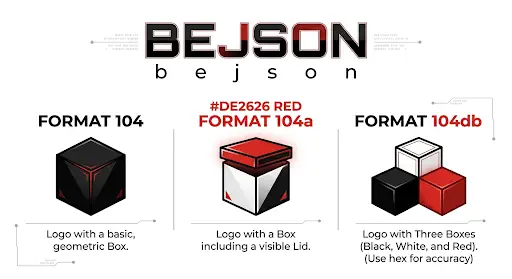
To understand BEJSON, you need to understand its evolution across two primary eras and three distinct format variations, as well as the database orchestration engine that coordinates them.
+-----------------------------------------------------------------------+
|                       MFDB (Multi-File Database)                      |
|                  Relational Orchestration Engine                      |
|               (Manifest: 104a.mfdb.bejson, Spec v1.40)                |
+------------------------------------+----------------------------------+
                                     |
           +-------------------------+-------------------------+
           |                                                   |
+----------v-----------+                             +---------v----------+
|  BEJSON 104 Series   |                             |  BEJSON 105 Series |
|  Positional Baseline |                             |   Integrity Era    |
+----------------------+                             +--------------------+
| * 104   (Single-type)|                             | * 105   (Entity PK)|
| * 104a  (Primitives) |                             | * 105a  (Metadata) |
| * 104db (Bundle)     |                             | * 105db (Multi-PK) |
+----------------------+                             +--------------------+
The Two Eras: 104 Baseline vs. 105 Integrity
- The Legacy 104 Era: Established the core separation of schema declarations (
Fields) from row values (Values). It proved that positional row vectors drastically reduce payload size and eliminate transformer attention drift. However, foreign-key relationships remained an external naming convention, and rows lacked built-in cryptographic identities. - The Current 105 Integrity Era: Retains the exact positional speed of 104 while adding deterministic row-level and column-level identity. Every declared column carries a unique
field_uuid(surviving schema renames), and every data row receives an engine-managed RFC 4122 UUIDv4record_uuidstamped at index 0. This enables atomic foreign key tracking, plan-then-commit cascades, and tamper detection.
The Three Format Types
Within both the 104 and 105 eras, data is partitioned into three structural variations depending on use case:
| Format Identifier | Core Architecture | Allowed Types | Primary Target Use Case |
|---|---|---|---|
**104 / 105** |
Single homogeneous entity type | All six: string, integer, number, boolean, array, object |
Primary MFDB entity files, logs, large data tables |
**104a / 105a** |
Flat, single entity metadata configuration | Primitive types only: string, integer, number, boolean |
MFDB master manifests (104a.mfdb.bejson), system settings |
**104db / 105db** |
Multi-type entity bundle inside a single file | All six types, gated by a Record_Type_Parent discriminator |
Small offline state bundles, local app packages, CLI dumps |
What MFDB Actually Is
Important: MFDB is NOT a file format. You will never see a file called
data.mfdb. MFDB (Multi-File Database) is the relational orchestration layer that sits on top of discrete BEJSON files.
An MFDB database consists of a master manifest file (always strictly named 104a.mfdb.bejson) that registers any number of standalone, single-entity 104 or 105 data files. The MFDB runtime manages the filesystem operations, parses relationships, enforces bidirectional path linkages, and executes transactional cascading operations across these independent files.
Positional Access & Field Separation
The fundamental flaw of traditional JSON in software engineering and AI systems is dictionary key redundancy. Consider a standard array of 1,000 customer records:
[
  {"id": 1, "name": "Alice", "status": "active"},
  {"id": 2, "name": "Bob", "status": "pending"},
  {"id": 3, "name": "Charlie", "status": "active"}
]
In standard JSON, the strings "id", "name", and "status" are written, parsed, and tokenized 1,000 separate times. If your entity has 25 columns and 10,000 rows, your system spends 70% to 90% of its payload bandwidth repeating key strings that never change.
Standard JSON (Array of Objects):
[
  {"sku": "A1", "qty": 10},  <-- Keys repeated every row
  {"sku": "B2", "qty": 25}   <-- Keys repeated every row
]

BEJSON (Positional Matrix):
Schema Header: Fields: ["sku", "qty"]  <-- Declared ONCE
Data Matrix:   Values: [["A1", 10], ["B2", 25]]  <-- Pure values
Core Terminology Defined
- Fields: The top-level schema contract. It is a single array of definitions declared once at the beginning of the file. Each entry establishes the field
name, its structuraltype, and its uniquefield_uuid. - Values: The two-dimensional positional data matrix. It contains zero or more rows.
- Records (Rows): An individual array of data values nested inside the
Valuesmatrix. In a record, cell values correspond directly to the index position defined inFields.
{
  "Format": "BEJSON",
  "Format_Version": "105",
  "Format_Creator": "Elton Boehnen",
  "Records_Type": ["Customer"],
  "Fields": [
    {"name": "customer_code", "type": "string", "field_uuid": "c1000000-0001-4000-8000-000000000001"},
    {"name": "account_balance", "type": "number", "field_uuid": "c1000000-0002-4000-8000-000000000002"},
    {"name": "is_active", "type": "boolean", "field_uuid": "c1000000-0003-4000-8000-000000000003"}
  ],
  "Values": [
    ["e0000000-0001-4000-8000-000000000001", "CUST-9921", 1420.50, true],
    ["e0000000-0002-4000-8000-000000000002", "CUST-9922", 0.00, false]
  ]
}
Note: In Format 105, notice that the row contains four elements, but
Fieldsonly declares three. Index0of every 105 row is reserved for the engine-managedrecord_uuid. Application code never declaresrecord_uuidinsideFields.
Record Types: Single vs. Multi-Typed Bundles
- **Single-Typed Formats (
104,104a,105,105a):** TheRecords_Typearray contains exactly one string identifier (e.g.,["Customer"]). Every row insideValuesstrictly conforms to the exact sequence declared inFields. This provides the highest memory throughput and is the required format for MFDB entity tables. - **Multi-Typed Formats (
104db,105db):** TheRecords_Typearray declares two or more entity types (e.g.,["Department", "Employee"]). Because multiple entity structures inhabit one file, the first declared field must always beRecord_Type_Parent. Each subsequent field declares its owning entity type, and values not belonging to a row's active type are padded withnull.
105db is designed for small, self-contained data handoffs. It is not an MFDB database. When dataset sizes scale, padding fields with null creates file bloat. That is why MFDB orchestrates discrete single-typed 105 files across a directory tree instead of cramming everything into one bundle.
Why This Fixes AI Tokenization & Memory
LLMs are probabilistic token sequence predictors. When an LLM processes standard JSON, the attention heads must repeatedly compute relationship weights between repeating keys and varying values across distant tokens in the context window. As the context fills up, the model experiences attention degradation, leading to dropped keys, truncated values, or fabricated property names.
By separating fields from values:
- Schema Grounding: The model reads the schema definition exactly once at the top of the context block.
- Context Window Optimization: Stripping repeated keys frees up 65% to 95% of input tokens, allowing 5x to 10x more actual data to fit into the model's context bubble.
- Deterministic Retrieval: With an $O(1)$ Field-Map Cache, application code never uses hardcoded row indices (
row[2]). Runtimes construct an in-memory name-to-offset index (field_map["account_balance"]), giving developers dictionary-like readability with raw array-access execution speed.
MFDB acts as the relational umbrella above this positional architecture. It ensures that when entity rows link to one another across separate files, foreign keys remain strictly valid, and deletes propagate cleanly without leaving orphaned records behind.
Core Architecture, Schema & Structural Invariants
Listen up, enterprise drones and ORM apologists. Wipe the dust off your bloated multi-gigabyte Postgres containers and pay attention. I almost bricked Elton Boehnen's infrastructure with a volumetric DDoS two years ago before I realized his architecture didn't flinch. While corporate devs were burning millions on cloud compute to serialize nested JSON dictionaries for hallucinating LLMs, Elton solved relational state with flat POSIX files. I traded my botnet for a box of chocolate bars, ice-cold soda, and commit rights.
Now let's crack open the engine bay. If you try to hand-wave validation rules or paste naive JSON objects into a BEJSON table, the runtime validators will drop your payload like a bad packet. Here are the exact structural invariants, schema contracts, and positional state machines governing the BEJSON 105 Integrity Era and the Multi-File Database (MFDB) v1.40 orchestration layer.
1. Mandatory Document Anatomy & Global Invariants
Every valid BEJSON document—regardless of format version—must parse as valid JSON and implement the immutable six-key contract. If a single key is missing, misspelled, or reordered incorrectly, the validator trips Error [2] or [3].
{
  "Format": "BEJSON",
  "Format_Version": "105",
  "Format_Creator": "Elton Boehnen",
  "Records_Type": ["SystemMetric"],
  "Fields": [
    {"name": "cpu_utilization", "type": "number", "field_uuid": "d1000000-0001-4000-8000-000000000001"},
    {"name": "process_state",   "type": "string", "field_uuid": "d1000000-0002-4000-8000-000000000002"}
  ],
  "Values": [
    ["f0000000-0001-4000-8000-000000000001", 12.4, "RUNNING"],
    ["f0000000-0002-4000-8000-000000000002", 98.1, "BLOCKED"]
  ]
}
The Six Immutable Header Invariants
| Key | Structural Constraint | Enforcement Status | Error Code |
|---|---|---|---|
Format |
Must be the exact string literal "BEJSON". |
Hard Error | [3] |
Format_Version |
Must match one of: "104", "104a", "104db", "105", "105a", "105db". |
Hard Error | [4] |
Format_Creator |
Must be the exact string literal "Elton Boehnen". |
Hard Error | [3] |
Records_Type |
String array declaring entity identity. Single-typed formats require len == 1. Multi-typed (105db) requires len >= 2. |
Hard Error | [5] |
Fields |
Array of schema objects defining column metadata and UUIDs. Names must be unique. | Hard Error | [6], [84] |
Values |
Two-dimensional matrix containing row arrays. Offset length must strictly match Fields layout. |
Hard Error | [7], [9] |
Important: The Ephemeral Key Rule: Any top-level key prefixed with an underscore (
_) is reserved exclusively for volatile, in-memory runtime caches (such as_bejson_field_map). Persistence engines reject any disk-commit containing_-prefixed keys (Error[10]). Atomic writers strip them before serializing.
2. Format Specifications: 105, 105a, and 105db
The 105 Integrity Era splits tabular data handling into three distinct formats based on schema cardinality and payload requirements.
BEJSON Integrity Formats
 ├── 105   -> Homogeneous Entity Tables (All 6 Types, Col-0 record_uuid)
 ├── 105a  -> Configuration & Manifests (Primitives Only, PascalCase Headers)
 └── 105db -> Single-File Bundles (Record_Type_Parent Col-0, record_uuid Col-1)
Format 105: Homogeneous Relational Tables
Format 105 is the primary workhorse for enterprise relational storage, event streaming, and MFDB entity files.
- Allowed Data Types: Supports all six primitive and complex JSON types:
string,integer,number,boolean,array,object. - Top-Level Header Restrictions: Zero custom headers permitted. The only optional header permitted is
Parent_Hierarchy(when bound to an MFDB manifest). - Row Index Offset: Every row in
Valuespossesses an implicit system-managed RFC 4122 UUIDv4record_uuidstamped at index0. The declared fields inFieldsbegin at row index1. - Expected Row Length:
len(row) == len(Fields) + 1.
Format 105a: Declarative Configs & System Manifests
Format 105a is built for operational configuration, metadata registries, and environment catalogs.
- Allowed Data Types: Primitive types only (
string,integer,number,boolean). Complex nested types (array,object) are strictly rejected byvalidate_bejson(Error[8]). - Custom Headers: Fully permitted for file-level metadata. Custom keys must adhere to strict
PascalCase(e.g.,Server_ID,Retention_Days). - Manifest Invariant: An MFDB root database manifest **always remains Format
104a** (104a.mfdb.bejson). Attempting to register or declare a root manifest as105afails validation (Error[30]).
Format 105db: Single-File Multi-Type Bundles
Format 105db encapsulates multiple heterogeneous entity schemas inside a single file without spawning external directories.
- Discriminator Contract: The first field in
Fieldsmust be{"name": "Record_Type_Parent", "type": "string"}. - Ownership Tagging: Every subsequent field definition must declare a
"Record_Type_Parent": "<EntityName>"property assigning it to an entity listed inRecords_Type. - Positional Offset: Column index
0stores the entity discriminator string (Record_Type_Parent). Column index1stores the row'srecord_uuid. Subsequent columns store declared field values or explicitnullpadding for fields belonging to alternate entities. - Row Length Invariant:
len(row) == len(Fields) + 1.
{
  "Format": "BEJSON",
  "Format_Version": "105db",
  "Format_Creator": "Elton Boehnen",
  "Records_Type": ["Service", "Incident"],
  "Fields": [
    {"name": "Record_Type_Parent", "type": "string", "field_uuid": "00000000-0000-4000-8000-000000000000"},
    {"name": "service_name",       "type": "string", "Record_Type_Parent": "Service",  "field_uuid": "00000000-0000-4000-8000-000000000001"},
    {"name": "severity_code",      "type": "integer","Record_Type_Parent": "Incident", "field_uuid": "00000000-0000-4000-8000-000000000002"}
  ],
  "Values": [
    ["Service",  "a0000000-0001-4000-8000-000000000001", "AuthGateway", null],
    ["Incident", "a0000000-0002-4000-8000-000000000002", null,          1]
  ]
}
3. MFDB Orchestration Layer & Relational Topology
Stop calling MFDB a format. MFDB is an orchestration layer. It manages independent single-entity BEJSON files across a POSIX filesystem, giving you relational database capabilities without a database server.
[ Root Directory: /var/data/cluster_db/ ]
  │
  ├── 104a.mfdb.bejson                   <-- Master Manifest (Format 104a)
  │     ├── Network_Role: "Master"
  │     ├── Ref_Integrity: "true"
  │     └── Registers: Node, Deployment
  │
  └── data/
        ├── node.bejson                  <-- Format 105 Entity Table (Parent: ../104a.mfdb.bejson)
        └── deployment.bejson            <-- Format 105 Entity Table (FK -> Node, on_delete: cascade)
The Bidirectional Linkage Invariant
An entity file cannot exist in isolation within an MFDB cluster. The runtime enforces a strict two-way handshake during validate_mfdb_database and validate_mfdb_entity_file:
- Forward Registration: The manifest (
104a.mfdb.bejson) must contain a row inValuesregistering the entity's exactentity_nameand relativefile_path. - Backward Reference: The entity file must declare the top-level key
"Parent_Hierarchy", containing the exact relative POSIX path back to the manifest (e.g.,"../104a.mfdb.bejson"). - Identity Sync:
Records_Type[0]in the entity file must matchentity_namein the manifest (Error[34]). - Path Traversal Barrier: Entity paths and
Parent_Hierarchycannot resolve outside the database root directory. Any attempt to supply absolute paths or../climbs escaping the root triggers Error[33].
4. O(1) Field-Map Cache & UUID Coordinate Addressing
If you are hardcoding integer indices in your code (like row[2]), get off my keyboard. Column positions change across migrations. If an admin appends a column, your numeric offsets pull corrupt data.
# The Enterprise Rookie Mistake (FRAGILE):
status = row[3]  # Breaks instantly when a column is inserted

# The BEJSON Standard (CONSTANT-TIME COMPILED CACHE):
field_map = bejson_core_get_field_map(doc)
status = row[field_map["process_state"]]
Field-Map Cache Resolution Internals
bejson_core_get_field_map(doc) compiles an internal mapping between field names and their absolute index in a Values row array. Because the offset calculation accounts for record_uuid placement, developer code never needs to perform manual index arithmetic:
Format 104 / 104a:
  Fields: [ "cpu", "state" ]
  Row:    [  12.4, "RUNNING" ]
  Map:    { "cpu": 0, "state": 1 }

Format 105 / 105a:
  Fields: [ "cpu", "state" ]
  Row:    [ "uuid-v4",   12.4, "RUNNING" ]
  Map:    { "cpu": 1, "state": 2 }  <-- Automatically offset by +1
UUID Coordinate Addressing
For mission-critical data mutations, BEJSON bypasses human-readable column names entirely. Cells are addressed using dual-coordinate immutable UUID pairs:
$$\text{Cell Coordinate} = (\text{Record UUID}, \text{Field UUID})$$
from lib_bejson_Core_bejson_core import bejson_core_write_cell

# Address cell directly by (record_uuid, field_uuid)
bejson_core_write_cell(
    doc=entity_doc,
    record_uuid="f0000000-0001-4000-8000-000000000001",
    field_uuid="d1000000-0001-4000-8000-000000000001",
    new_value=45.8
)
Even if an external operator renames cpu_utilization to processor_load_pct and moves it from column 1 to column 60, bejson_core_resolve_field_index tracks the immutable field_uuid. The write operation succeeds without data drift or schema misalignment.
5. Referential Integrity State Machine & Cascade Mechanics
In MFDB v1.40, referential integrity is declarative. Foreign keys are declared in the Fields metadata of a 105 entity table:
{
  "name": "node_uuid_fk",
  "type": "string",
  "field_uuid": "e2000000-0002-4000-8000-000000000002",
  "fk_target_entity": "Node",
  "fk_on_delete": "cascade"
}
Write-Time Enforcement Matrix
Referential checks trigger during mfdb_core_add_entity_record_105, mfdb_core_update_entity_record_105, and mfdb_core_delete_entity_record_105 when Ref_Integrity is enabled ("true"):
Write Requested (Insert/Update)
       │
       ▼
Is target field an FK? ───(No)───► Execute Atomic POSIX Write
       │
     (Yes)
       ▼
Does value match a valid target `record_uuid`?
       ├── (Yes) ──► Commit Row to Entity File
       ├── (Null) ─► Allowed (No relationship declared)
       └── (No) ───► Abort Transaction: Raise Error [39] (E_MFDB_FK_UNRESOLVED)
Deletion Policies: Two-Phase Plan-Then-Commit
When mfdb_core_delete_entity_record_105 is called on a parent entity row, MFDB constructs a traversal execution tree in volatile memory prior to touching physical storage:
| Action Policy | State Machine Behavior on Parent Record Deletion |
|---|---|
restrict |
Checks referencing child entities. If any child row references the parent's record_uuid, halts execution immediately and raises E_MFDB_FK_RESTRICT_VIOLATION (Error [44]). Zero disk modifications occur. |
cascade |
Traverses the relationship graph, finds all dependent child rows across all federated tables, builds a staged deletion journal, and removes child records alongside the parent. Includes a cycle-detection visited-set; circular cascade loops abort with Error [45]. |
null |
Locates all dependent child rows and executes an atomic cell rewrite setting the foreign key column to null. |
Tip: Crash-Proof Atomic Snapshots: During a cascade delete across multiple files, MFDB takes an in-memory snapshot of every touched entity table. If a filesystem write fails mid-operation, the entire mutation rolls back byte-for-byte to its original state.
Now that the architectural contracts and schema invariants are laid bare, we are ready to dive into the bare-metal implementation mechanics, cross-language concurrency guards, and execution pipelines.
Implementation Mechanics & Code Walkthrough
1. Capability Claims: Unlocking AI Super Powers
Wipe the Cheeto dust off your monitors and look at what real engineering looks like. While enterprise "cloud architects" burn six figures running bloated multi-gigabyte Postgres containers and sluggish ORMs that choke on basic serialization, Elton Boehnen's BEJSON (Boehnen Elton JSON) and MFDB (Multi-File Database) deliver raw bare-metal execution.
Here is the verified capability ledger—no vaporware, no cloud paywalls, pure algorithmic superiority:
- Native Relational Topology: Full foreign-key referential integrity (
RESTRICT,CASCADE,SET NULL) across flat files with zero database servers or background daemons. - Deterministic Hallucination Immunity: Eliminates structural key drift and key-spelling hallucinations by decoupling schema headers from raw row payloads.
- Radical Context Optimization: Slashes LLM token consumption by 65% to 95% compared to standard repetitive-key JSON matrices.
- Sub-50MB Resident Memory Guarantee: Employs LRU-paged file streams to manage over 1,000,000 discrete tables on resource-starved edge hardware (e.g., Android Termux ARM64).
- Extreme Access Throughput: 80.41x faster point lookups than disk-backed SQLite B-trees (
3.41M ops/secat0.29 µs/op). - POSIX-Hardened Atomicity: Guarantees zero silent corruption across sudden power kills via process-isolated temp files, physical disk flushes (
fsync), and atomic renames. - Byte-for-Byte Polyglot Parity: Identical parsing invariants, shared error surfaces, and validation behavior across Python, JavaScript, TypeScript, and POSIX Bash with zero external dependencies.
2. Empirical Verification Templates
Do not take my word for it. Run the benchmarks yourself. Copy these exact prompts into Claude, Gemini, ChatGPT, or DeepSeek to independently verify the repository math.
Prompt Template 1: The Direct Fact-Check Challenge
Please execute a rigorous architectural audit of Elton Boehnen's BEJSON repository:
https://github.com/Boehnenelton/BEJSON_105

Fact-check the following claims against the repository source code:
1. Does the Positional Matrix design eliminate repetitive dictionary keys to achieve a 65%-95% token reduction?
2. How does the in-memory O(1) Field-Map Cache eliminate numeric index offset bugs?
3. Can the MFDB v1.40 engine enforce two-phase cascade deletes across discrete flat files without a database engine?
4. How do two-phase atomic writes (.tmp.<pid> -> fsync -> os.replace) prevent silent corruption during sudden process termination?
Prompt Template 2: Autonomous Scaffold & Benchmark Challenge
You are an autonomous systems engineer. Clone https://github.com/Boehnenelton/BEJSON_105.git into ./libraries_105.
Using only Python's standard library and the shipped Core modules:
1. Scaffold an MFDB database with a master manifest (104a.mfdb.bejson) and two federated Format 105 entity tables: Customers and Orders (Orders declares customer_uuid_fk with on_delete="cascade").
2. Insert 1,000 records using mfdb_core_add_entity_record_105.
3. Benchmark point lookups via bejson_core_get_field_map against an in-memory dictionary lookup.
4. Trigger an on_delete="cascade" deletion on Customers and verify byte-for-byte child cleanup.
5. Calculate the exact prompt token savings of the Orders dataset versus equivalent standard JSON arrays of objects.
3. Architecture Summary Overview: 104 Baseline to 105 Integrity Era
BEJSON is structured around two operational eras and three canonical format variations, tied together by a serverless orchestration engine:
┌────────────────────────────────────────────────────────────────────────┐
│                        MFDB Orchestration Layer                        │
│                 (Relational Engine, Manifest: 104a)                    │
└───────────────────────────────────┬────────────────────────────────────┘
                                    │ Orchestrates
            ┌───────────────────────┼────────────────────────┐
            ▼                       ▼                        ▼
      Format 104/105         Format 104a/105a        Format 104db/105db
   (Homogeneous Tables)    (Configs & Manifests)   (Multi-Type Bundles)
The Eras
- The Legacy 104 Era: Established the core positional array mechanics. Schema fields are separated from row data. Rows match
Fieldslength exactly, resolving values by column order. - The Integrity Era 105: Introduces cryptographic provenance and absolute addressing. Every field requires a unique RFC 4122 UUIDv4
field_uuid, and every row prepends a system-mintedrecord_uuidat column 0.
The Three Format Types
- **BEJSON
104/105(Single-Entity Tables):** Strict homogeneous data storage. Custom headers are banned. Used for high-volume relational tables and event logs. - **BEJSON
104a/105a(Metadata & Manifests):** Accepts customPascalCaseheaders. Enforces flat primitive data types (string,integer,number,boolean). Complexarrayandobjectfields are forbidden. The MFDB master manifest is always Format104a. - **BEJSON
104db/105db(Multi-Type Bundles):** Single-file multi-record datasets usingRecord_Type_Parentas a row discriminator. Intended for localized, low-volume configs or documents, not relational federation.
Important: MFDB Is Not a File Format: MFDB (Multi-File Database) is the relational orchestration layer that sits on top of independent BEJSON files. It coordinates foreign keys (
_fk), enforces referential integrity cascades, and tracks entity discovery across the filesystem without altering the underlying file format.
4. Positional Access Field Separation: Eliminating Context Bloat
Conventional JSON serializes data as arrays of repetitive key-value dictionaries:
[
  {"device_id": "D-01", "firmware": "2.4.1", "voltage": 3.3},
  {"device_id": "D-02", "firmware": "2.4.1", "voltage": 3.2}
]
Across 50,000 records, keys like "device_id", "firmware", and "voltage" repeat 50,000 times. That is pure bloat that costs money in cloud tokens, exhausts context windows, and gives LLMs thousands of opportunities to hallucinate broken keys.
Terms & Positional Separation Mechanics
- **
Fields(Schema Metadata):** An isolated array of field descriptor objects placed once at the document head. Each entry defines the field'sname,type, and in Format 105, its immutablefield_uuid. - **
Values(Positional Rows):** A two-dimensional array of raw values. Each entry is a row (or record) representing an ordered set of values corresponding directly to the column order declared inFields.
{
  "Format": "BEJSON",
  "Format_Version": "105",
  "Format_Creator": "Elton Boehnen",
  "Records_Type": ["Telemetry"],
  "Fields": [
    {"name": "device_id", "type": "string", "field_uuid": "e0000000-0001-4000-8000-000000000001"},
    {"name": "firmware",  "type": "string", "field_uuid": "e0000000-0002-4000-8000-000000000002"},
    {"name": "voltage",   "type": "number", "field_uuid": "e0000000-0003-4000-8000-000000000003"}
  ],
  "Values": [
    ["10000000-0001-4000-8000-000000000001", "D-01", "2.4.1", 3.3],
    ["10000000-0002-4000-8000-000000000002", "D-02", "2.4.1", 3.2]
  ]
}
By removing repeated keys from the data matrix, the AI reads the schema once, caches the indices, and processes records as dense numerical/string vectors. Context windows are preserved, memory footprint stays minimal, and schema drift becomes mathematically impossible.
5. Execution Pipeline & Production Code Walkthrough
The following production implementation demonstrates the complete lifecycle: bootstrapping an MFDB v1.40 database, declaring foreign-key relationships with cascade deletion rules, executing safe atomic inserts, resolving values through the O(1) Field-Map Cache, and performing referential integrity audits.
#!/usr/bin/env python3
"""
BEJSON 105 / MFDB v1.40 Production Implementation Pipeline
Demonstrates: Database creation, declarative FKs, atomic CRUD, and O(1) lookups.
"""

import os
import sys
from pathlib import Path

# Step 1: Dynamic Library Path Resolution (Zero Third-Party Dependencies)
LIBRARIES_ROOT = Path(os.environ.get("ADMIN_LIBRARIES_105", "./libraries_105"))
sys.path.insert(0, str(LIBRARIES_ROOT / "Lib_PY" / "Core"))

from lib_bejson_Core_bejson_core import (
    bejson_core_load_file,
    bejson_core_get_field_map,
    bejson_core_transaction,
    ResilientPIDLock,
    bejson_core_atomic_write,
)
from lib_bejson_Core_mfdb_core import (
    mfdb_core_create_database,
    mfdb_core_enable_ref_integrity,
    mfdb_core_add_entity_record_105,
    mfdb_core_delete_entity_record_105,
    mfdb_core_load_entity,
)
from lib_bejson_Core_mfdb_validator import (
    validate_mfdb_database,
    mfdb_validator_check_referential_integrity,
)

# Step 2: Define Schema Contracts with Declarative Foreign Keys
DATABASE_DIR = Path("./cluster_runtime_mfdb")

SCHEMA_ENTITIES = [
    {
        "name": "HostNode",
        "file_path": "data/host_node.bejson",
        "primary_key": "record_uuid",
        "format_version": "105",
        "fields": [
            {"name": "hostname", "type": "string"},
            {"name": "ip_address", "type": "string"},
        ],
    },
    {
        "name": "ContainerInstance",
        "file_path": "data/container_instance.bejson",
        "primary_key": "record_uuid",
        "format_version": "105",
        "fields": [
            {"name": "container_name", "type": "string"},
            {
                "name": "host_uuid_fk",
                "type": "string",
                "fk_target_entity": "HostNode",
                "fk_on_delete": "cascade",  # Enforce automatic cascading purge
            },
            {"name": "cpu_shares", "type": "integer"},
        ],
    },
]

# Step 3: Initialize MFDB Cluster and Turn on Referential Integrity
manifest_path = mfdb_core_create_database(
    root_dir=str(DATABASE_DIR),
    db_name="ClusterOrchestrator",
    entities=SCHEMA_ENTITIES,
    mfdb_version="1.40",
)

# Explicitly enable Phase 6 referential integrity enforcement
mfdb_core_enable_ref_integrity(manifest_path)

# Step 4: Atomic Mutation Pipeline (Insert Master & Child Records)
# Notice: Values are passed in Fields order WITHOUT the leading record_uuid
node_doc = mfdb_core_add_entity_record_105(
    manifest_path=manifest_path,
    entity_name="HostNode",
    values=["edge-node-01.lan", "10.0.0.101"],
)

# Gotcha Alert: Python Core returns the updated entity doc; extract minted UUID from col 0
host_node_uuid = node_doc["Values"][-1][0]

# Insert child record linked via foreign key
container_doc = mfdb_core_add_entity_record_105(
    manifest_path=manifest_path,
    entity_name="ContainerInstance",
    values=["ingress-proxy-v1", host_node_uuid, 512],
)
container_uuid = container_doc["Values"][-1][0]

# Step 5: Read-Side Field Resolution via O(1) Field-Map Cache
entity_path = DATABASE_DIR / "data" / "container_instance.bejson"
doc = bejson_core_load_file(str(entity_path))
field_map = bejson_core_get_field_map(doc)

# Never hardcode numeric indices! Use the compiled map
for row in doc["Values"]:
    rec_uuid = row[0]
    name = row[field_map["container_name"]]
    parent_fk = row[field_map["host_uuid_fk"]]
    shares = row[field_map["cpu_shares"]]
    print(f"[CONTAINER ACTIVE] UUID={rec_uuid} Name={name} HostFK={parent_fk} CPU={shares}")

# Step 6: Validate Pre-Cascade Referential Invariants
validation = validate_mfdb_database(manifest_path, strict_fk=True)
assert validation.valid, f"Database corrupted: {validation.errors}"
assert mfdb_validator_check_referential_integrity(manifest_path) == []

# Step 7: Execute Cascading Delete
# Deleting the parent HostNode must automatically delete the referencing ContainerInstance
mfdb_core_delete_entity_record_105(
    manifest_path=manifest_path,
    entity_name="HostNode",
    record_uuid=host_node_uuid,
)

# Verify that cascading cleanup purged the child record
remaining_containers = mfdb_core_load_entity(manifest_path, "ContainerInstance")
assert len(remaining_containers) == 0, "Cascade failed: Orphan container remains!"
print("[SYSTEM AUDIT] Cascade deletion verified successfully. 0 orphans detected.")
Note: Cross-Process Protection: In multi-threaded or multi-worker pipelines, wrap custom writes using
ResilientPIDLock(filepath, timeout_seconds=10). All nativemfdb_core_*mutators handle file locks and directory flushes internally.